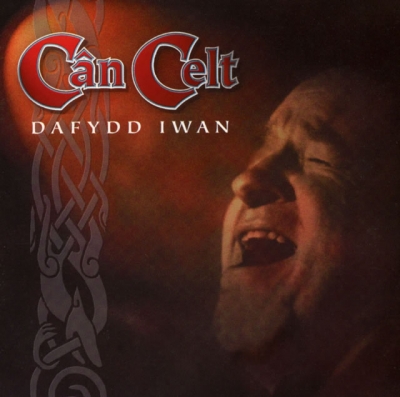
 Preview unavailable.
Use the source link to view the original.
400 × 397 px · JPEG · The full frame
Sain (Recordiau) Cyf. · CC BY-SA 3.0
More to discover
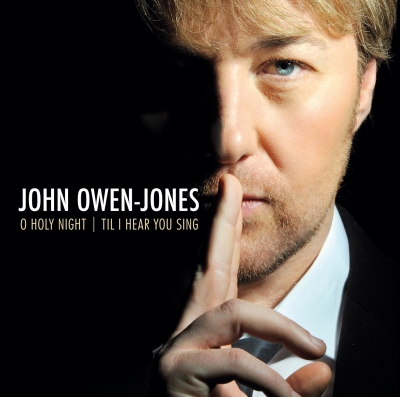 Holy night/Til I hear you sing
Sain (Recordiau) Cyf. · CC BY-SA 3.0
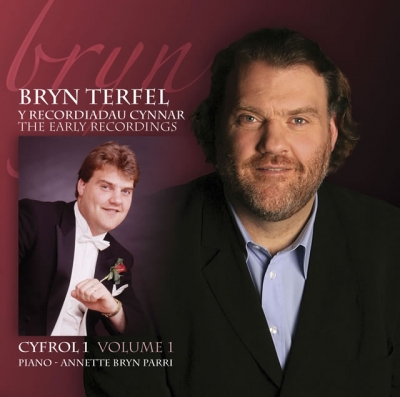 Bryn Terfel Cyfrol 1 / Volume 1
Sain (Recordiau) Cyf. · CC BY-SA 3.0
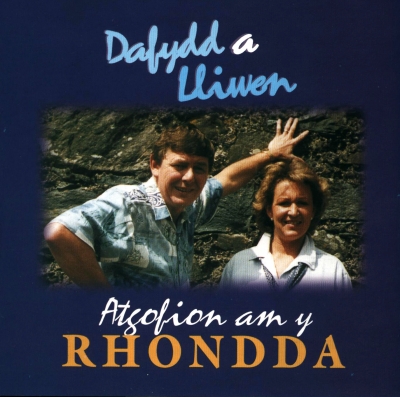 Atgofion Am Y Rhondda
Sain (Recordiau) Cyf. · CC BY-SA 3.0
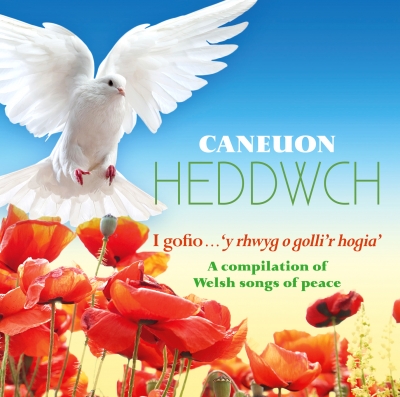 Caneuon Heddwch
Sain (Recordiau) Cyf. · CC BY-SA 3.0
Can Celt
Dafydd Iwan
Album artwork for Dafydd Iwan, provided through the SAIN Records collection on Wikimedia Commons.
Inside the image.
A square album cover is dominated by a shadowy close-up portrait on the right: a light-skinned man shown in profile or three-quarter view, with his head tipped back, eyes closed and mouth open as if singing or calling out. His face emerges from deep brown shadow; warm orange light catches his forehead, nose, cheek, teeth and the pale beard along his jaw and chin. The portrait fills much of the right half and fades into the dark background at the lower and right edges.
The background is a smoky blend of burnt orange, rust red and dark brown, brightest behind the lettering at the upper left and around the top of the portrait. A tall, narrow grey ornament runs down the left side. It consists of interlaced, curling bands in a knotwork-like pattern, with larger looping forms near the bottom; its lower section is partly lost in shadow. The image has no visible border. The dark areas around the portrait and ornament create a strong contrast with the lit face and red-orange upper-left field.
At the upper left, large decorative lettering reads “Cân Celt”. The letters are red with pale outlines and dark shadowing, and have an ornate, medieval-looking character, including flourishes and a small star-like accent near the end. Directly underneath, smaller white capitals with generous spacing read “DAFYDD IWAN”. Both lines sit over the brighter area of the background, with the title extending towards the centre of the cover. The artwork has a photographic appearance in the portrait, combined with graphic lettering and a drawn ornamental motif; the lighting and colour transitions are soft and hazy.
What the image evokes.
The cover feels as though it is balanced between a private human moment and an emblematic, almost ceremonial frame. The singer’s lifted head and open mouth suggest a voice pushing out of darkness, while the knotted vertical design gives the left edge the solidity of carved stone or an old hanging. Neither element entirely explains the other: the ornament can read as a protective border, but its curling lines also seem to wind into the same shadow that surrounds the face.
The red glow has the warmth of embers or lamplight, yet the portrait remains largely obscured. That combination lends the image an intimate, brooding quality rather than a bright stage-like one. The elaborate title lettering evokes old storybooks and heraldic decoration, while the close, expressive face feels immediate and bodily. The result holds a tension between antique flourish and human urgency, as if a voice has surfaced briefly from a dark, richly coloured room.
Associations are subjective readings, rather than documented influences or statements of the artist’s intention.
Read. Share. Reimagine.
These visual notes are offered under CC BY 4.0. Credit dbcovers, link to the source, keep the licence information and indicate any changes.
Ready-to-use attribution
Other attribution formats are allowed when reasonable for the medium and context. The artwork has its own separate licence.
Lettering & observation notes
- Cân Celt — Upper left
- DAFYDD IWAN — Below the title at upper left
Artwork sources & licence.
Credit the author and source, link to the licence and indicate any changes. Share adaptations under compatible terms. Read the full licence for details.
- Source year
- 1995
- Source author field
- Sain (Records) Ltd
- Attribution
- Sain (Recordiau) Cyf.
- Collection
- SAIN / Wikimedia Commons
- Catalogue number
- SAIN SCD 2097
- Permission evidence
- Public VRT notice: 2017050910011681
- Source checked
- 20 October 2026

Year as recorded on the source file page; it may not represent the work’s first release. File unchanged; browser preview scaled proportionally.